Cosmetic & Medical Dermatology
Scar and Keloid Treatment in Tampa
Scars are a normal part of the skin's healing process. Whether from acne, surgery, injury, or burns, Dr. Sergay offers scar revision treatments to reduce their appearance and improve skin texture. Every treatment plan is personalized to your scar type, skin tone, and goals.
Book an Appointment
Dr. Sergay's Approach
What Causes Scars?
Scars form when the dermis (the deep layer of skin) is damaged — whether from acne, surgery, injury, burns, or even minor cuts. As the skin repairs itself, it produces collagen fibers to close the wound. The way those fibers are laid down determines how the scar looks: flat and pale, raised and thick, or sunken and pitted.
While no treatment can erase a scar completely, modern dermatology offers powerful options to significantly soften, flatten, and fade scars — making them far less noticeable. Dr. Sergay uses advanced in-office technologies including the DermaV vascular laser and LaseMD Ultra resurfacing laser, combined with other modalities like microneedling and injectable treatments. She takes a comprehensive approach, selecting the right combination for your specific scar type, skin tone, and healing history to achieve the best possible outcome.
All Skin Tones
Safe for every complexion
Combination Therapy
Multiple modalities for best results
Know Your Scar
Types of Scars
Hypertrophic Scars
Raised, thickened scars that stay within the boundaries of the original wound. They often start red or pink and may become lighter over time. Common after surgery, deep cuts, or burns. They can be itchy or uncomfortable but tend to improve gradually on their own.
- Stays within wound boundary
- Red or pink, may fade
- Common after surgery
- May itch or feel tight
Keloid Scars
Aggressive, raised scars that grow beyond the original wound boundary — sometimes significantly. Keloids can continue to grow for months or years and are more common in darker skin tones. They often run in families and can appear after even minor skin trauma like piercings or acne.
- Grows beyond wound edges
- Can keep enlarging over time
- Genetic predisposition
- Common on chest, ears, shoulders
Atrophic Scars
Depressed or pitted scars that sit below the surrounding skin. The most familiar type is acne scarring — including ice pick, boxcar, and rolling scars. They form when inflammation destroys collagen during the healing process, leaving a visible indentation.
- Sits below skin surface
- Ice pick, boxcar, or rolling
- Common from acne
- Caused by collagen loss
Contracture Scars
Scars that tighten the skin, often after burns or large-area injuries. Because contracture scars pull the skin, they can restrict movement — especially over joints. These scars may also affect deeper tissues like muscles and nerves, requiring a multi-layered treatment approach.
- Skin tightening & pulling
- Often from burns
- May restrict movement
- Can affect deeper tissues
Advanced Options
How Dr. Sergay Treats Scars
Dr. Sergay will assess your scar type, skin tone, and goals to build a personalized treatment plan — often combining multiple modalities for the best possible outcome.
Laser Therapy
Fractional and pulse-dye lasers resurface scar tissue and reduce redness by stimulating collagen remodeling. At Sergay Dermatology, we use the DermaV vascular laser for red and pigmented scars, and the LaseMD Ultra for textural improvement and skin resurfacing. Multiple sessions are typically needed for optimal results, with minimal downtime between treatments.
Corticosteroid Injections
Injectable steroids are a first-line treatment for hypertrophic and keloid scars. Delivered directly into the scar tissue, they reduce inflammation and flatten raised scars over a series of sessions. Often combined with laser or other modalities for best results.
Microneedling
Tiny sterile needles create micro-channels in the skin, triggering collagen and elastin production. Especially effective for atrophic acne scars — it lifts depressed areas and improves overall skin texture. Can be enhanced with PRP (platelet-rich plasma) for accelerated healing.
Surgical Scar Revision
For wide, prominent, or poorly healed scars, surgical revision removes the old scar and creates a new, finer closure that heals more cleanly. Often combined with post-surgical laser or silicone treatments to optimize the final appearance. Performed under local anesthesia in-office.
Silicone Gel & Sheets
Medical-grade silicone is one of the most evidence-backed, non-invasive treatments for scars of all types. Applied as a gel or self-adhesive sheet, it hydrates and softens scar tissue while reducing redness, itching, and thickness. Ideal for post-surgical scars and ongoing maintenance.
Chemical Peels & Topicals
Superficial chemical peels and prescription retinoids smooth texture and fade discoloration in mild atrophic scars. Best suited for shallow acne scarring and surface-level pigmentation. Often used as maintenance between more intensive treatments.
4–6
Average laser sessions for optimal results
Weeks
Typical interval between treatments
Custom
Every plan is individualized
Minimal
Downtime for most procedures
Your Dermatologist
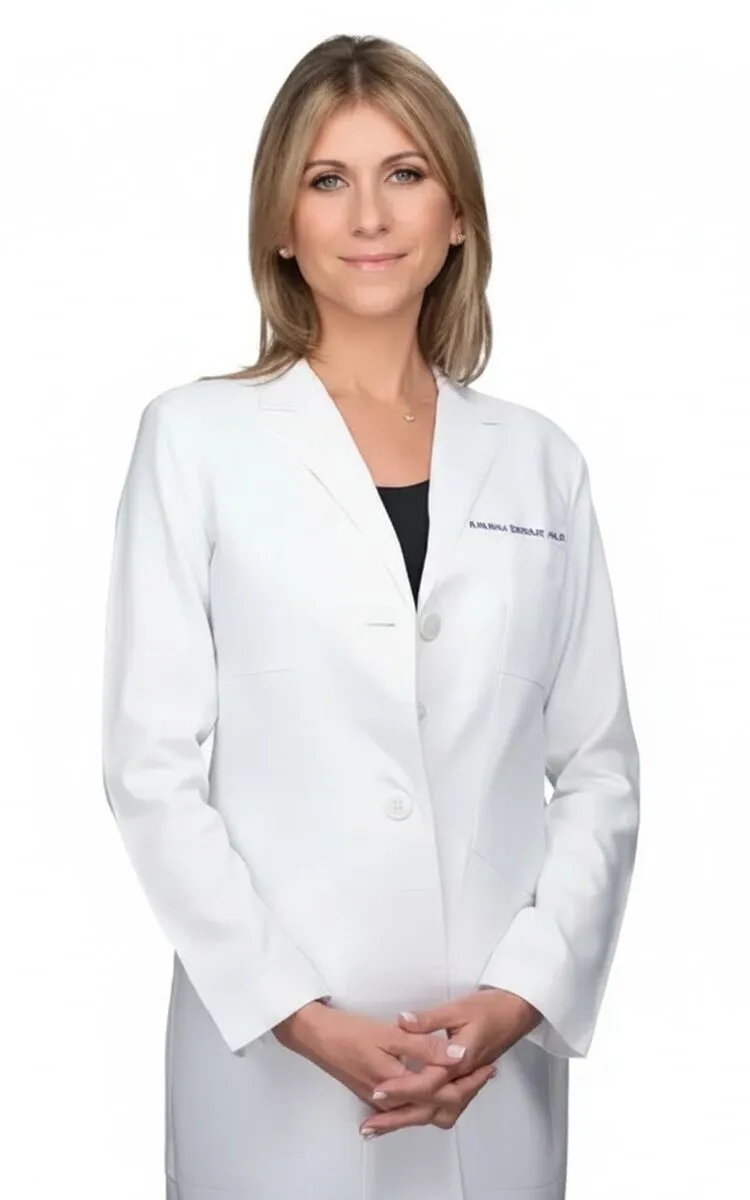
About Amanda Sergay, MD
Board Certified
American Board of Dermatology
Specialties
Medical · Surgical · Cosmetic
Location
South Tampa, FL
Board-Certified Dermatologist · Medical · Surgical · Cosmetic
Amanda Sergay, MD is a board-certified dermatologist committed to excellence in comprehensive dermatological care. Originally from the Tampa area, Dr. Sergay received her undergraduate degree from Emory University and earned her medical degree from the University of Miami Miller School of Medicine.
She completed her residency in dermatology at Mount Sinai St. Luke's-Roosevelt Hospital Center in New York City, where she served as Chief Resident during her final year. Her practice encompasses medical, surgical, and cosmetic dermatology, treating both adults and children.
Dr. Sergay has been named to Tampa Magazine's Top Docs Edition in 2019, 2020, 2021, 2022, 2023, 2024, 2025 and 2026, and was twice named to New York Magazine's New York Rising Star list.
Awards & Recognition
Tampa Magazine Top Docs
 20192020202120222023202420252026
Super Doctors

Emory University
Undergraduate
Univ. of Miami Miller
Medical Degree
Mount Sinai NYC
Residency · Chief Resident
Patient Reviews
What Our Patients Say
Real Google reviews from patients who trust Dr. Sergay with their skin health.
“Dr. Sergay is personable, professional, and is a knowledgeable clinician. She listens well and makes you part of the process. I have seen her for two years for medical and aesthetic issues. I have been very satisfied with her care and have referred her to family and friends.”
Ariadne Rodriguez
6 reviews
“After what felt like a never-ending search for the right doctor to help with my skin irritations, I finally found Dr. Sergay — and what a blessing! She's not only incredibly genuine, but she also took the time to explain everything in detail so I fully understood both my issue and the solution. It's easy to see why she's made such a respected name for herself here and in New York.”
Christin Hillis
13 reviews · 2 photos
“Wonderful office, the Dr. listened to all my concerns and addressed each with good communication and ideas. My new Derm.”
Carol Gould
Local Guide · 21 reviews · 1 photo
“Now this is a medical practice done right! I love how they don't play the insurance game and are a privately owned practice. This allows them to provide top notch care and a patient experience that is hard to find anywhere else. Dr. Sergay is extremely thorough during her exams and so kind. Trust her with your care!”
Victoria Hansen
Local Guide · 123 reviews · 144 photos
“First time appointment — Dr. Sergay was amazing. Very easy to talk to and she told me the choices I had and got the procedure done. Highly recommend.”
Darren Finebloom
Local Guide · 21 reviews
“Dr Sergay is wonderful. She's deeply knowledgeable about her field, and also has a wonderful, attentive manner. She and her staff are so caring and responsive. I highly recommend.”
Dana Whiting
3 reviews
Common Questions
Scar Treatment FAQ
No treatment can erase a scar entirely — but modern dermatology can dramatically reduce a scar's appearance, making it significantly flatter, softer, and closer to your natural skin tone. Many patients find their scars become barely noticeable after a well-planned treatment series. Dr. Sergay sets realistic expectations at your first visit so you know exactly what results to anticipate.
The ideal window for scar intervention is early — once the wound is fully closed and any stitches have been removed (typically 2–4 weeks after surgery or injury). Starting silicone gel, laser, or other treatments during the active remodeling phase (first 3–6 months) can significantly improve the final appearance of the scar. However, even older scars can be improved with the right approach.
There's no single 'best' treatment — it depends on your scar type. Microneedling (often with PRP) is excellent for atrophic rolling and boxcar scars. Fractional laser resurfacing works well for texture and pigmentation. Ice pick scars may respond best to TCA CROSS (a precise chemical technique) or punch excision. Most patients benefit from a combination of 2–3 modalities. Dr. Sergay will map out a plan after examining your skin.
Yes — but the approach must be carefully selected. Certain lasers and aggressive peels carry a higher risk of post-inflammatory hyperpigmentation in darker skin types. Dr. Sergay has extensive experience treating patients of all skin tones and chooses modalities (like microneedling and specific laser wavelengths) that are safe and effective for melanin-rich skin. A patch test may be recommended before full treatment.
Most scar treatment plans involve 3–6 sessions spaced 4–6 weeks apart, with visible improvement after each session. Laser therapy and microneedling typically require a series for optimal results, while corticosteroid injections may show results after just 1–2 sessions. Maintenance treatments (every 6–12 months) may be recommended to sustain results over time.
It depends. Scar revision following a medically necessary surgery or traumatic injury may be partially covered by insurance. Purely cosmetic scar treatment (including most acne scar treatments) is typically not covered. Dr. Sergay's direct care model means transparent, upfront pricing — we'll discuss all costs before starting any treatment plan so there are no surprises.
Start Your Journey
Schedule a Visit
Whether it's acne scarring, a surgical scar, or a keloid, Dr. Sergay will build a personalized plan to reduce their appearance. Transparent pricing.