General Dermatology
Psoriasis Treatment in Tampa
Psoriasis is a chronic, scaly, itchy skin condition that may also involve the nails and joints. Dr. Sergay brings deep expertise — including a published chapter on psoriasis and quality of life — to create effective, long-term management strategies for every patient.
Book an Appointment
Dr. Sergay's Approach
Understanding Psoriasis
Psoriasis is a chronic, scaly itchy skin rash that may also involve nails and/or joints. In milder cases, it may only require topical treatments. However, if it affects a significant surface area of the skin or if joints are involved, oral or injectable medications may be needed.
Dr. Sergay can evaluate the type of psoriasis you have and provide proven management options. Her approach always begins with a thorough assessment of your disease severity, affected areas, impact on quality of life, and any joint involvement — then matching you to the most appropriate treatment tier.
Published Medical Authority
In the book Treatment of Psoriasis (2008), Dr. Sergay authored a chapter entitled “Quality of Life and Psoriasis.” She is keenly aware of the impact this condition can have on a person and formulates the right management strategy for long-term clearance.
Full Severity Assessment
Mild, moderate & severe cases
Quality-of-Life Focus
Treating the whole patient
Know Your Condition
Types of Psoriasis
Plaque Psoriasis
The most prevalent form, accounting for about 80–90% of all psoriasis cases. Presents as raised, red, scaly patches (plaques) covered by silvery-white scales most commonly on the elbows, knees, scalp, and lower back.
- Thick, silvery-white scales
- Raised red plaques
- Itching and soreness
- Common on elbows, knees, scalp
Guttate Psoriasis
Characterized by small, dot-like lesions that appear suddenly, often triggered by a streptococcal throat infection. More common in children and young adults, and may resolve on its own or become chronic.
- Small teardrop-shaped spots
- Often follows strep infection
- Common in children & young adults
- May resolve without treatment
Inverse Psoriasis
Occurs in skin folds such as the armpits, groin, under the breasts, and around the genitals. Appears as smooth, shiny red patches rather than scales. Friction and sweating can worsen symptoms.
- Smooth, red shiny patches
- Located in skin folds
- Worsened by friction & sweat
- No silvery scale present
Pustular Psoriasis
A less common form characterized by white, non-infectious pustules (pus-filled blisters) surrounded by red skin. Can be localized to the palms and soles or cover the entire body in severe cases.
- White pustules on red skin
- Localized or widespread
- Can cause fever if severe
- Palms and soles often affected
Erythrodermic Psoriasis
A rare but serious form causing widespread red, fiery skin that appears to be burned, covering most of the body. This can be life-threatening and requires immediate medical attention.
- Widespread redness over body
- Peeling, shedding skin
- Intense itching or burning
- Requires urgent treatment
Psoriatic Arthritis
Up to 30% of people with psoriasis develop psoriatic arthritis — inflammation of the joints causing pain, stiffness, and swelling. Early treatment is essential to prevent permanent joint damage.
- Joint pain and stiffness
- Affects up to 30% of patients
- Nail changes often present
- Biologics are highly effective
What Causes Flares
Common Psoriasis Triggers
While psoriasis has a genetic component, flares are often driven by identifiable triggers. Recognizing and managing these is a key part of Dr. Sergay's long-term treatment strategy.
Stress
- Emotional or psychological stress
- Work-related anxiety
- Major life events
- Sleep deprivation
Infections
- Streptococcal throat infections
- Skin infections
- HIV and immune-modifying conditions
- Upper respiratory illness
Certain Medications
- Lithium (mood stabilizer)
- Beta-blockers (blood pressure)
- Antimalarial drugs
- NSAIDs in some patients
Lifestyle Factors
- Alcohol consumption
- Smoking
- Obesity (worsens severity)
- Poor diet and inactivity
Skin Injury (Koebner Phenomenon)
- Sunburn
- Cuts or scrapes
- Insect bites
- Tattoos or piercings
Weather & Environment
- Cold, dry weather
- Low humidity indoors
- Excessive sun exposure
- Dry air from heating systems
Proven Management Options
How Dr. Sergay Treats Psoriasis
Treatment is matched to your psoriasis type, severity, and affected body areas — from targeted topicals for mild cases to advanced biologic therapies for extensive disease.
Topical Treatments
For mild to moderate psoriasis, prescription-strength topical corticosteroids, vitamin D analogs (calcipotriene), retinoids, and calcineurin inhibitors reduce inflammation and slow skin cell turnover.
Phototherapy (Light Therapy)
Narrowband UVB phototherapy slows the rapid skin cell growth that drives plaques. It's highly effective for moderate-to-severe plaque psoriasis and can be combined with other treatments.
Oral Systemic Medications
Medications such as methotrexate, acitretin (a retinoid), and cyclosporine work throughout the body to suppress the immune response driving psoriasis. Used when psoriasis covers significant body surface area.
Biologic Therapy
Biologics target specific proteins in the immune pathway — including TNF-α, IL-17, IL-23, and IL-12/23 — that trigger psoriasis. Options include adalimumab, secukinumab, ixekizumab, and guselkumab, with excellent efficacy and safety data.
Targeted Small Molecules
Oral JAK inhibitors and PDE4 inhibitors (like apremilast/Otezla) offer targeted immune suppression without injection. Ideal for patients who prefer oral therapy for moderate-to-severe disease.
Trigger Management & Lifestyle
Reducing stress, limiting alcohol, quitting smoking, and maintaining a healthy weight all significantly improve psoriasis outcomes. Dr. Sergay integrates lifestyle counseling into every treatment plan.
125M+
People affected worldwide
30%
Develop psoriatic arthritis
90%+
Clearance with biologics
Published
Expert — authored medical textbook chapter
Your Dermatologist
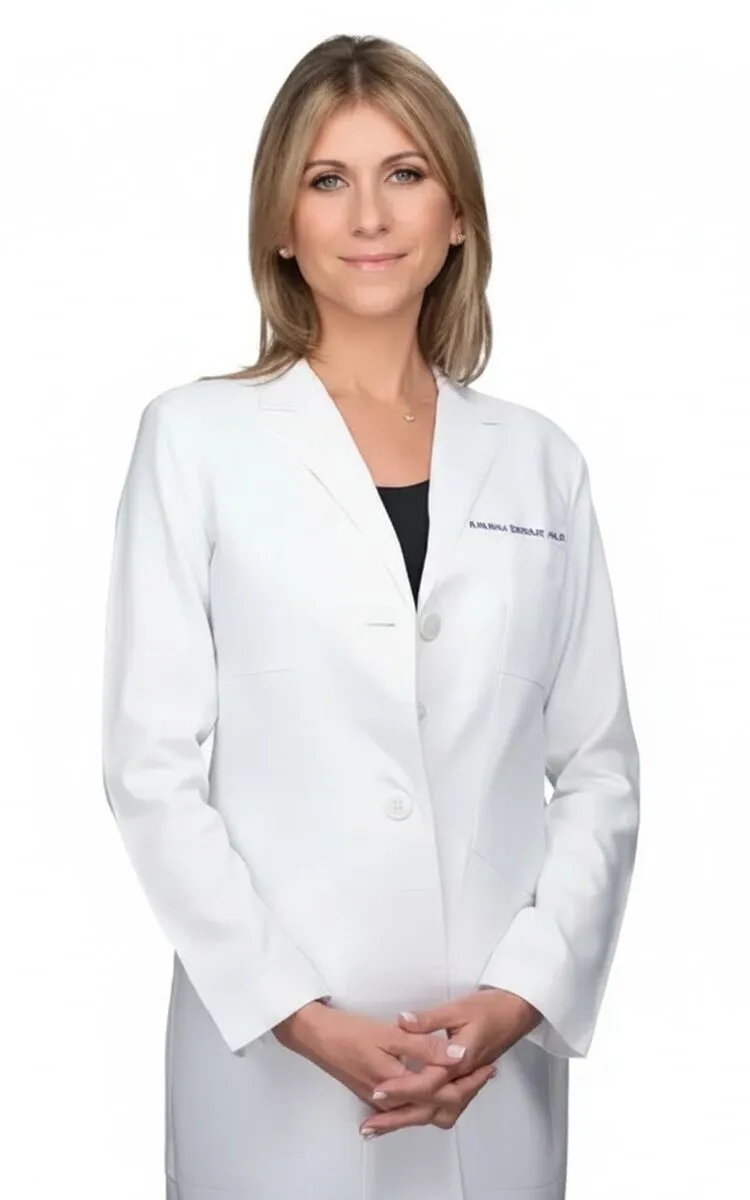
About Amanda Sergay, MD
Board Certified
American Board of Dermatology
Specialties
Medical · Surgical · Cosmetic
Location
South Tampa, FL
Board-Certified Dermatologist · Medical · Surgical · Cosmetic
Amanda Sergay, MD is a board-certified dermatologist committed to excellence in comprehensive dermatological care. Originally from the Tampa area, Dr. Sergay received her undergraduate degree from Emory University and earned her medical degree from the University of Miami Miller School of Medicine.
She completed her residency in dermatology at Mount Sinai St. Luke's-Roosevelt Hospital Center in New York City, where she served as Chief Resident during her final year. Her practice encompasses medical, surgical, and cosmetic dermatology, treating both adults and children.
Dr. Sergay has been named to Tampa Magazine's Top Docs Edition in 2019, 2020, 2021, 2022, 2023, 2024, 2025 and 2026, and was twice named to New York Magazine's New York Rising Star list.
Awards & Recognition
Tampa Magazine Top Docs
 20192020202120222023202420252026
Super Doctors

Emory University
Undergraduate
Univ. of Miami Miller
Medical Degree
Mount Sinai NYC
Residency · Chief Resident
Patient Reviews
What Our Patients Say
Real Google reviews from patients who trust Dr. Sergay with their skin health.
“Dr. Sergay is personable, professional, and is a knowledgeable clinician. She listens well and makes you part of the process. I have seen her for two years for medical and aesthetic issues. I have been very satisfied with her care and have referred her to family and friends.”
Ariadne Rodriguez
6 reviews
“After what felt like a never-ending search for the right doctor to help with my skin irritations, I finally found Dr. Sergay — and what a blessing! She's not only incredibly genuine, but she also took the time to explain everything in detail so I fully understood both my issue and the solution. It's easy to see why she's made such a respected name for herself here and in New York.”
Christin Hillis
13 reviews · 2 photos
“Wonderful office, the Dr. listened to all my concerns and addressed each with good communication and ideas. My new Derm.”
Carol Gould
Local Guide · 21 reviews · 1 photo
“Now this is a medical practice done right! I love how they don't play the insurance game and are a privately owned practice. This allows them to provide top notch care and a patient experience that is hard to find anywhere else. Dr. Sergay is extremely thorough during her exams and so kind. Trust her with your care!”
Victoria Hansen
Local Guide · 123 reviews · 144 photos
“First time appointment — Dr. Sergay was amazing. Very easy to talk to and she told me the choices I had and got the procedure done. Highly recommend.”
Darren Finebloom
Local Guide · 21 reviews
“Dr Sergay is wonderful. She's deeply knowledgeable about her field, and also has a wonderful, attentive manner. She and her staff are so caring and responsive. I highly recommend.”
Dana Whiting
3 reviews
Common Questions
Psoriasis FAQ
No — psoriasis is absolutely not contagious. It is an autoimmune condition driven by genetics and an overactive immune system. You cannot catch psoriasis from another person through skin contact, sharing items, or any other means.
There is currently no cure for psoriasis, but it can be very effectively managed. Many patients achieve complete or near-complete skin clearance with modern biologic therapies. The goal of Dr. Sergay's treatment is long-term control with minimal flares and the best possible quality of life.
Both cause red, itchy skin but they are different conditions. Psoriasis typically presents as well-defined, thick, silvery-scaly plaques — most commonly on elbows, knees, and scalp. Eczema (atopic dermatitis) tends to be less well-defined, affects flexural areas like the inner elbows, and often begins in early childhood. A board-certified dermatologist like Dr. Sergay can distinguish between them and provide the right treatment.
Biologics are generally considered when psoriasis is moderate-to-severe — meaning it covers a significant body surface area, affects sensitive areas like the scalp, face, palms, or genitals, or significantly impacts quality of life. They are also considered when topicals and traditional systemics have failed or are not tolerated. Dr. Sergay will evaluate whether you're a good candidate.
Yes. Up to 30% of people with psoriasis develop psoriatic arthritis, causing joint pain, stiffness, and swelling. Psoriasis is also associated with an increased risk of cardiovascular disease, metabolic syndrome, and depression. Dr. Sergay assesses and addresses the full picture of your health — not just the skin.
This varies by treatment. Topical corticosteroids can reduce plaques within 1–2 weeks. Phototherapy typically requires 2–3 sessions per week over 6–8 weeks. Biologic therapies often show significant improvement within 12–16 weeks, with many patients achieving 90%+ clearance. Dr. Sergay will set realistic expectations at your consultation.
While diet alone doesn't cause or cure psoriasis, certain factors can influence severity. Obesity significantly worsens psoriasis and reduces the effectiveness of biologics. Alcohol consumption is a known trigger. An anti-inflammatory diet — rich in vegetables, fish, and whole grains — may help. Dr. Sergay will discuss lifestyle modifications that can complement your medical treatment.
Scalp and nail psoriasis can be particularly challenging to treat and require specific approaches. Scalp psoriasis may be treated with medicated shampoos, topical solutions, or biologics for severe cases. Nail psoriasis (pitting, thickening, discoloration) is a strong predictor of psoriatic arthritis. Dr. Sergay has specific expertise in treating both locations.
Take the First Step
Schedule a Visit
Dr. Sergay treats both mild and severe psoriasis with an appropriate management strategy.