Pediatric Dermatology
Pediatric Dermatology in Tampa
Rashes are one of the most common reasons parents bring their children to the dermatologist. From viral exanthems to bacterial infections to inflammatory skin conditions, accurate diagnosis is the key to effective treatment — and peace of mind for families.

Accurate Diagnosis Matters
Why See a Dermatologist for Your Child's Rash?
Many pediatric rashes look similar — viral exanthems, eczema flares, contact dermatitis, fungal infections, and bacterial infections can all present with redness and bumps. Misidentification leads to inappropriate treatment, delayed recovery, and unnecessary worry.
A board-certified dermatologist brings specialized expertise in pediatric skin conditions that goes beyond what a general practitioner or urgent care can offer. Dr. Sergay evaluates the pattern, distribution, morphology, and history of your child's skin findings to arrive at an accurate diagnosis — and an effective treatment plan.
Most rashes don't require a trip to the ER. Booking a same-day or next-day appointment with Dr. Sergay is almost always the most efficient, accurate, and reassuring path forward for your family.
Family-Friendly Practice
Children & adults of all ages
Expert Diagnosis
Beyond urgent care guesswork
What We Diagnose & Treat
Common Pediatric Rashes & Skin Infections
Dr. Sergay evaluates and treats the full spectrum of pediatric rashes — from common infections to inflammatory conditions.
Viral Rashes
Hand, Foot & Mouth Disease
Blister-like sores on palms, soles, and mouth — very common in toddlers. Caused by Coxsackievirus. Self-limited but contagious.
Roseola (HHV-6)
High fever followed by a pink rash spreading from trunk to limbs as fever breaks. Most common in children under 2.
Fifth Disease (Parvovirus B19)
Classic 'slapped cheek' facial redness followed by lacy rash on arms and trunk. Mild and self-resolving.
Viral Exanthem (non-specific)
Many viruses cause a generalized pink-red rash that can be difficult to distinguish clinically. Dermatologist evaluation helps exclude other causes.
Bacterial Infections
Impetigo
Honey-colored crusted sores most often around the nose and mouth. Highly contagious. Requires topical or oral antibiotics depending on extent.
Cellulitis
Spreading redness, warmth, and swelling of the skin indicating deeper bacterial infection. Requires prompt antibiotic treatment.
Folliculitis
Pimple-like bumps at hair follicles from bacterial (often Staph) infection. Common in areas of friction or sweating.
Scarlet Fever Rash
Sandpaper-like red rash following strep throat infection. Requires antibiotic treatment and dermatologic confirmation.
Fungal Infections
Ringworm (Tinea Corporis)
Ring-shaped, scaly patches caused by dermatophyte fungi — not actually a worm. Responds well to antifungal treatment.
Tinea Capitis (Scalp Ringworm)
Fungal infection of the scalp causing scaly patches and hair loss in children. Requires oral antifungals — topical treatment alone is insufficient.
Tinea Versicolor
Yeast overgrowth causing lighter or darker patches on trunk and upper arms. More visible in summer. Treated with antifungal shampoos and creams.
Candidiasis (Diaper Area)
Yeast infection in the diaper area presenting as bright red, well-defined rash with satellite pustules. Common after antibiotic use.
Inflammatory Rashes
Itchy, red, weeping skin most common in flexural areas. Very common in children — see our dedicated Eczema page for full details.
Contact Dermatitis
Red, blistering, or weepy rash in a pattern corresponding to contact with an allergen or irritant (e.g., nickel, poison ivy, detergents).
Pityriasis Rosea
Starts with a single 'herald patch' then spreads in a Christmas tree pattern on the trunk. Self-resolving in 6–8 weeks, often mistaken for tinea.
Less common than in adults but presents with well-defined scaly plaques. Guttate psoriasis — raindrop-shaped lesions after strep — is the most common childhood form.
Your Dermatologist
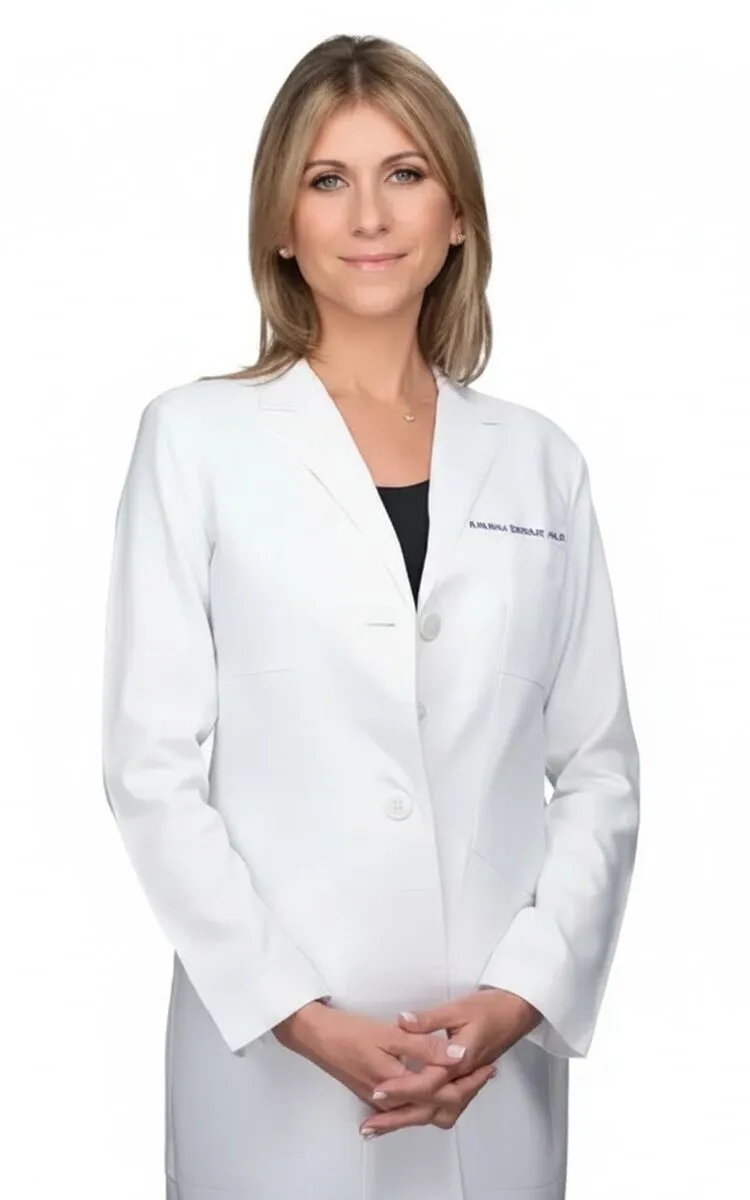
About Amanda Sergay, MD
Board Certified
American Board of Dermatology
Specialties
Medical · Surgical · Cosmetic
Location
South Tampa, FL
Board-Certified Dermatologist · Medical · Surgical · Cosmetic
Amanda Sergay, MD is a board-certified dermatologist committed to excellence in comprehensive dermatological care. Originally from the Tampa area, Dr. Sergay received her undergraduate degree from Emory University and earned her medical degree from the University of Miami Miller School of Medicine.
She completed her residency in dermatology at Mount Sinai St. Luke's-Roosevelt Hospital Center in New York City, where she served as Chief Resident during her final year. Her practice encompasses medical, surgical, and cosmetic dermatology, treating both adults and children.
Dr. Sergay has been named to Tampa Magazine's Top Docs Edition in 2019, 2020, 2021, 2022, 2023, 2024, 2025 and 2026, and was twice named to New York Magazine's New York Rising Star list.
Awards & Recognition
Tampa Magazine Top Docs
 20192020202120222023202420252026
Super Doctors

Emory University
Undergraduate
Univ. of Miami Miller
Medical Degree
Mount Sinai NYC
Residency · Chief Resident
Patient Reviews
What Our Patients Say
Real Google reviews from patients who trust Dr. Sergay with their skin health.
“Dr. Sergay is personable, professional, and is a knowledgeable clinician. She listens well and makes you part of the process. I have seen her for two years for medical and aesthetic issues. I have been very satisfied with her care and have referred her to family and friends.”
Ariadne Rodriguez
6 reviews
“After what felt like a never-ending search for the right doctor to help with my skin irritations, I finally found Dr. Sergay — and what a blessing! She's not only incredibly genuine, but she also took the time to explain everything in detail so I fully understood both my issue and the solution. It's easy to see why she's made such a respected name for herself here and in New York.”
Christin Hillis
13 reviews · 2 photos
“Wonderful office, the Dr. listened to all my concerns and addressed each with good communication and ideas. My new Derm.”
Carol Gould
Local Guide · 21 reviews · 1 photo
“Now this is a medical practice done right! I love how they don't play the insurance game and are a privately owned practice. This allows them to provide top notch care and a patient experience that is hard to find anywhere else. Dr. Sergay is extremely thorough during her exams and so kind. Trust her with your care!”
Victoria Hansen
Local Guide · 123 reviews · 144 photos
“First time appointment — Dr. Sergay was amazing. Very easy to talk to and she told me the choices I had and got the procedure done. Highly recommend.”
Darren Finebloom
Local Guide · 21 reviews
“Dr Sergay is wonderful. She's deeply knowledgeable about her field, and also has a wonderful, attentive manner. She and her staff are so caring and responsive. I highly recommend.”
Dana Whiting
3 reviews
Common Questions
Pediatric Rashes FAQ
If the rash is spreading rapidly, your child has a high fever, seems very unwell, or has difficulty breathing — go to an ER immediately. For a rash that's been present for more than a day or two, isn't improving, is itchy or painful, or has been treated without success, a dermatologist appointment is the right call. A dermatologist will provide a much more specific diagnosis and targeted treatment than urgent care.
While photos can give a general impression, many rashes look very similar in photos and require in-person evaluation of texture, distribution, and associated symptoms for accurate diagnosis. Telemedicine has limitations for skin conditions that benefit from hands-on assessment.
Recurrent impetigo may indicate Staph aureus nasal carriage in the child or a family member. Dr. Sergay can evaluate for this and recommend decolonization strategies (mupirocin nasal ointment, bleach baths) to break the cycle of recurrent infection.
Yes — ringworm is contagious through direct skin contact and shared items. Most schools allow return to school after 24–48 hours of antifungal treatment has begun, though policies vary. Scalp ringworm (tinea capitis) is more contagious and may require longer exclusion.
Clinical features — pattern, associated symptoms, fever profile, and timeline — help distinguish viral from bacterial rashes, but it's not always straightforward even for experienced clinicians. A dermatologist evaluation avoids unnecessary antibiotic prescriptions for viral rashes while ensuring bacterial infections are treated appropriately and promptly.
Many children do improve with age — approximately 60–70% of childhood eczema clears or significantly improves by adulthood. However, some children continue into adulthood, and a significant number develop associated allergic conditions (asthma, hay fever). Early effective treatment and a good maintenance routine may positively influence the natural history.
Get Answers
Worried About Your Child's Skin?
Don't guess. Book with Dr. Sergay for an accurate diagnosis, a targeted treatment plan, and peace of mind for your whole family.